Doorbusters, Typos, and 3 A.M. Line Justice: An Ode to the Newspaper Black Friday Circular
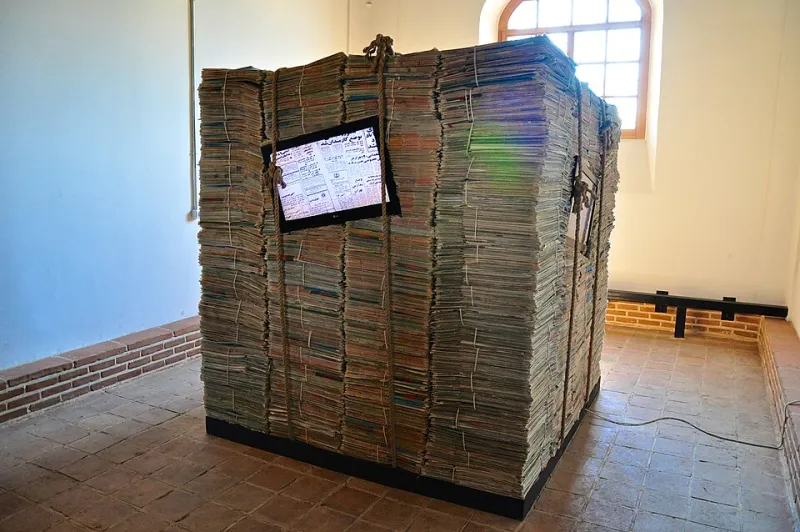
Photo: Babak Farrokhi from Tehran, IRAN, CC BY 2.0, via Wikimedia Commons
The Black Friday circular did not whisper. It shouted from a newsprint megaphone, usually while you were still half-asleep and wearing socks as gloves. Before the deal dropped into an app, it landed on the driveway in a plastic sleeve, thick enough to double as a doorstop. And for one glorious morning, the most important piece of literature in America was a 48-page advertisement for a $99 mystery laptop and a toaster that also played FM radio.
In 2026, doorbusters live in push alerts, browser tabs, and suspicious countdown clocks. That is efficient. It is also a little sad. The printed circular was not just a sales tool. It was a chaotic pop-culture zine with a corporate budget, a genuine rabbit hole, and more accidental comedy than most sitcoms.
The Doorbuster Was a Promise and a Threat
A doorbuster had two jobs: make the price look impossible and make the clock feel personal. The copy never said, reasonably, that a limited quantity would be available. It screamed DOORBUSTER in a font that looked like it had been electrocuted. Then it added a tiny asterisk, which led to a paragraph of legal fog so dense you needed a flashlight and a law degree to decode it.
The ritual was specific. You got the paper. You got a red marker, a yellow highlighter, and maybe a second marker for items you were pretending not to want. You circled a television. You circled a slow cooker. You circled a bundle that included a tablet, a case, a screen protector, and a gift card, all for one price that made no mathematical sense unless you assumed the tablet was imaginary.
Then you showed the circular to someone else. Negotiations began. Grandma wanted the stand mixer. Your uncle wanted the 55-inch TV and had opinions about the line strategy. A sibling wanted the video game console that was definitely sold out before the store opened. This was not shopping. This was a draft-day war room conducted on a kitchen table.
Typography With the Energy of a Fire Drill
The design language of the Black Friday circular deserves its own museum wing. Prices were never just printed. They were detonated. A number like $14.99 might appear inside a starburst, inside a circle, inside a rectangle, next to a cartoon turkey wearing a headset. There were arrows pointing at other arrows. There were fonts that seemed to be having a disagreement in public.
And the items! A single spread could promise a microwave, a blender, a 12-pack of socks, a drone, a memory-foam pillow, and a tablet case for a model of tablet nobody owned. The circular did not care about narrative coherence. It cared about volume. It was the visual equivalent of someone yelling every item in a storage unit while a marching band played nearby.
This is also where the accidental comedy lived. A product photo would be slightly wrong. A headline would promise something like MEGA DOORBUSTER EVENT next to a blender that looked tired. A bundle would include three items that clearly belonged to three different rooms and two different decades. The fine print would say something like quantities limited, no rain checks, see store for details, and suddenly you were reading a thriller.
Bundle Deals That Made No Sense, and We Loved Them
The bundle was the circular's weirdest invention. You did not simply buy a laptop. You bought a laptop, a printer, a carrying case, a mouse, and a one-year subscription to a software suite that sounded made up. The price was presented as a heroic act of generosity. The catch was buried in the fine print like a land mine.
Sometimes the bundle felt like a dare. Buy this camera and receive a tripod, a memory card, a photo printer, and a frame. Great. Now you were a photographer. Buy this vacuum and get a second vacuum for reasons nobody explained. Buy this TV and receive an HDMI cable that was probably three feet long and destined to live behind the couch forever.
The best bundles had a mysterious item. A rebate card. A streaming stick. A warranty that may or may not have covered the thing you were buying. A gift card that expired before you remembered it existed. The circular did not explain. The circular only shouted. And honestly? We respected the commitment.
Regional Weirdness Was the Real Collector's Item
National chains ran the same ads, but local circulars were their own ecosystem. A store in one part of the country would advertise snow blowers and space heaters with the urgency of a rescue mission. Another would push patio furniture and mosquito traps because the weather had different plans. Local mattress chains bought full pages and featured a guy pointing at a bed with the intensity of a prosecutor.
Grocery circulars added their own layer of chaos. Buy one pack of dinner rolls, get a second one for a penny. Save 40 cents on green beans. There was always a turkey deal with enough asterisks to fill a novel. The grocery circular was less glamorous than the electronics circular, but it had better stakes. You could not eat a discounted tablet.
And every region had its own legendary ad. The furniture store with the jingle. The appliance store with the owner in a cowboy hat. The electronics chain that promised a free printer with every laptop and then seemed surprised when people showed up. These ads were disposable, but they became local folklore.
Circling Items Was the Original Wish List
There was something deeply satisfying about circling an item. It was analog adding-to-cart. It was commitment without consequence. You could circle a $2,000 TV and a $9 waffle maker in the same session. Nobody stopped you. The circular was a safe space for terrible financial ideas.
Kids treated the toy circular like a catalog from another planet. You circled the massive dollhouse. You circled the remote-control car. You circled the board game that looked fun on the box and would later require 45 minutes of setup. Then you handed the circular to a parent and hoped the message landed.
Adults did the same thing, just with more guilt. You circled a stand mixer and told yourself it was an investment. You circled a vacuum and called it practical. You circled a tablet and said it was for the family. The circular made every purchase feel like a quest reward.
What We Lost When the Circular Went Digital
The modern Black Friday experience is faster, cleaner, and undeniably convenient. In 2026, you can compare prices in seconds, set alerts, and avoid a parking lot that looks like a post-apocalyptic movie. That is progress. We are not pretending otherwise.
But the paper circular had a ritual quality that apps cannot replicate. It required anticipation. It required a marker. It required the small drama of unfolding a page and finding the thing you wanted, only to realize it was a different model with a smaller screen and no charger in the box.
Digital deals are here to stay. The doorbuster is now a notification, the line is now a queue in an app, and the newspaper circular is mostly a memory. Still, somewhere in the back of our brains, there is a red circle around a toaster that also plays FM radio. And honestly, that toaster still slaps.